Read, Write, Own
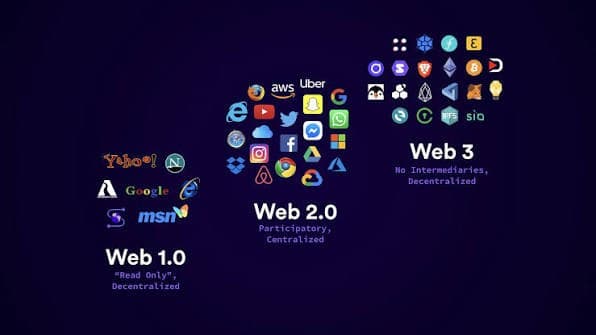
Every so often the web changes shape, and each time it does, what an ordinary person can do online changes with it. It has happened twice already, and it is happening again, and the simplest way to tell the story is in three words. Read, write, own.
The first web was something you read. In the 1990s, a page was a place you visited to take something in, a document someone had put online for you to look at. It was open and it was yours to browse, but the traffic ran one way. Most people were an audience rather than participants.
The web we have lived in since the mid-2000s let us write. Almost overnight, anyone could publish, post, sell, and build an audience without owning a single server, and that was a genuine leap forward. But it came with a quiet trade. The platforms that made all of this easy also came to own the results of it. Your profile, your followers, the reviews you earned, the years of work you poured into an account, all of it lived on someone else's system under someone else's rules. Convenience in exchange for control turned out to be the defining bargain of the era.
Web3 is the attempt to keep the writing and add a third verb, which is own. The idea is that the things you build and gather online, your identity, your work history, your assets, should belong to you in a way no single company can quietly revoke, and should travel with you wherever you go. It is a real answer to the thing that had started to bother a lot of people about the previous twenty years.
Here is the part the industry tends to say less often. For most people, that ownership has not actually arrived. Web3 spent much of its first decade wrapping a genuinely good idea in an experience only experts could use, asking ordinary people to learn key management, recovery phrases, and gas fees before they could touch any of it. Ownership you cannot practically use is not much of an upgrade over the convenience you gave up to reach it.
So the real evolution still ahead of us is not decentralization for its own sake. It is ownership that an ordinary person can hold as easily as they hold a social account today. The next version of the web does not have to choose between the ease of Web2 and the ownership of Web3. It has to deliver both at once, which means hiding the machinery while leaving the control firmly in the user's hands. That is the standard we hold ourselves to, and we think it is the one the whole space will eventually be measured against.